
The Ocean in the Desert: Why I Bring the Sea Into Work Made From Sand
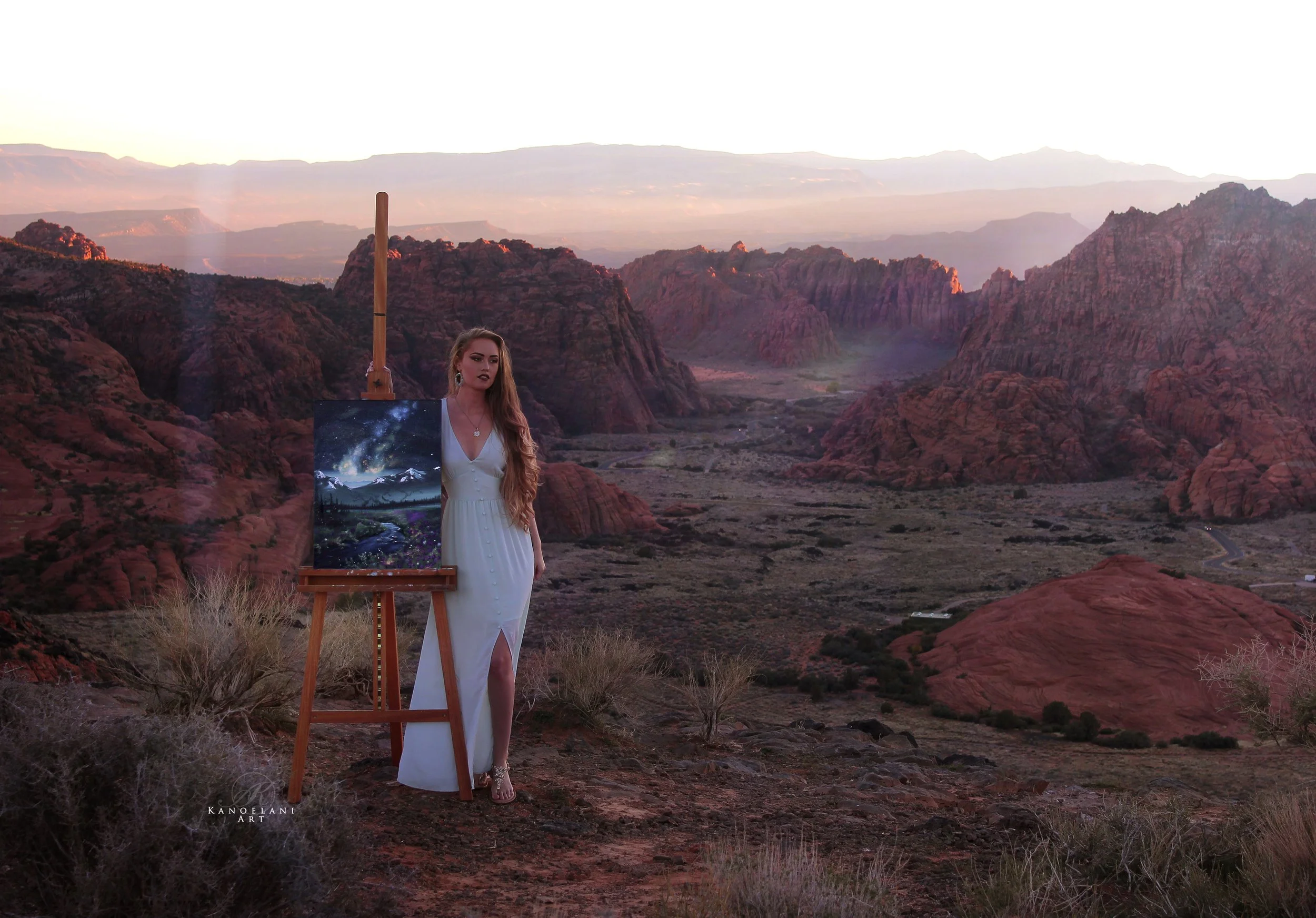
I carry the ocean in my blood.
I'm Hawaiian and the Pacific has always been part of me in a way that goes deeper than memory. It's ancestral. It's cellular. The ocean isn't just a place I've loved. It's something I'm made of.
So when I ended up in the desert, in Southern Utah of all places, I wasn't sure what to make of it at first.
That was years ago. And somewhere along the way, something shifted — and the desert started to feel less foreign than I expected.
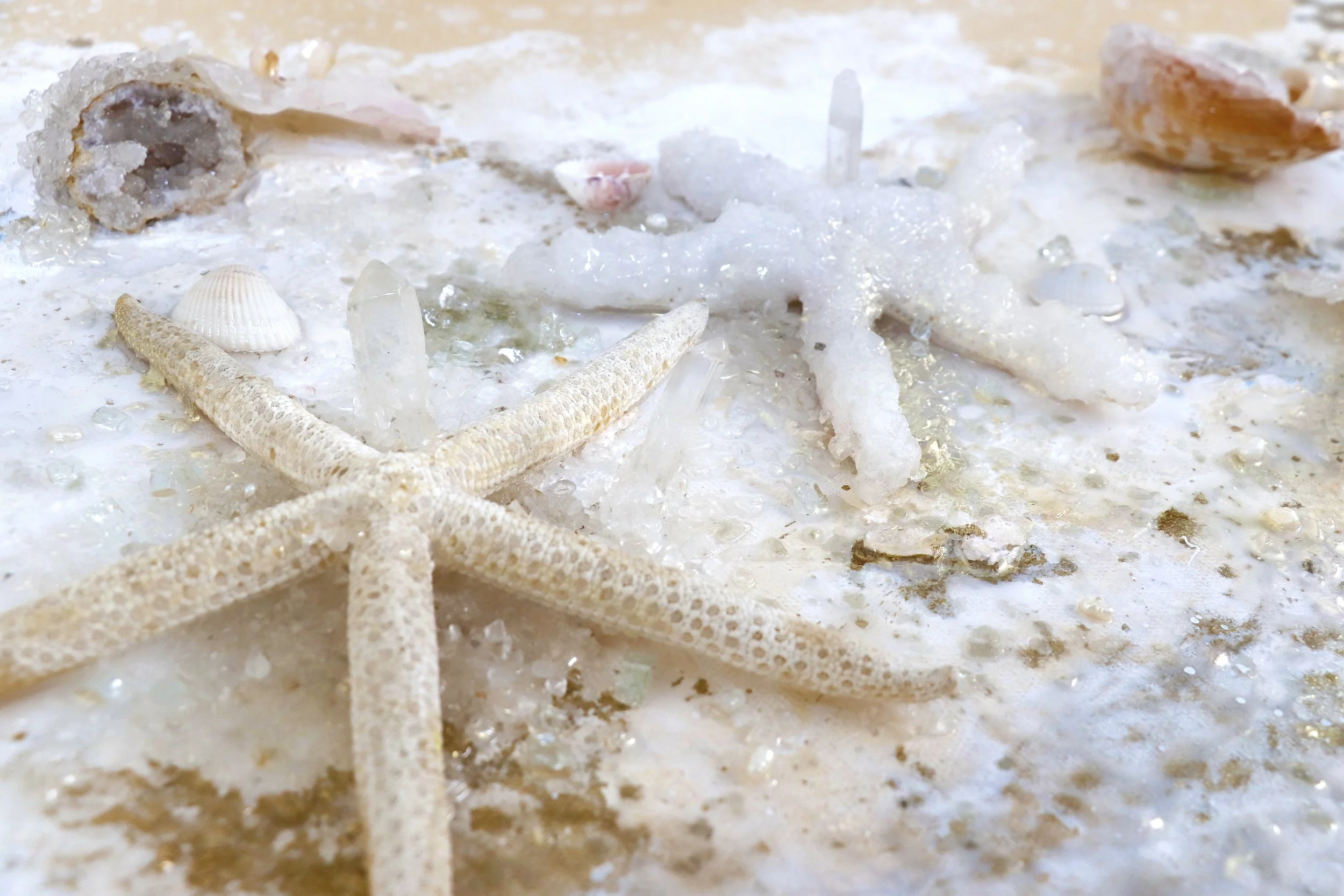
There's a theory that stops me every time I think about it: millions of years ago, the American Southwest was covered by a vast inland sea. The red rock formations, the sandstone layers, the minerals embedded in this earth — they're the remnants of an ancient ocean floor. What looks like desert is, in geological memory, still the sea.
I think about that more than I probably should.
Because there's something about Southern Utah that called to me before I fully understood why. The way the light moves here. The scale of the sky. The silence that isn't quite silence. I've wondered sometimes if Hawaiian people feel drawn to this land precisely because the ocean never really left — it just went underground, into the rock, into the minerals, into the red earth that turns violet at dusk. Maybe some of us can still feel it there. Maybe that pull isn't mystical at all. Maybe it's just memory. The body knowing what the mind hasn't caught up to yet.
That sense of recognition lives in my work now.
The light here is unlike anywhere else I've been. It's sharp and it's honest and it changes so fast you can barely track it. The sky at 2am is so full of stars it feels structural — like the stars are holding something up. I've driven out into the dark just to sit in it. That kind of sky doesn't let you be small in a bad way. It makes you feel like you're part of something enormous.
That sense of scale is in my paintings. The large canvases, the depth of the layers, the way I use negative space — I think that comes from years of looking at horizons that don't end. When you're surrounded by that much space, small art feels dishonest.
The desert also gave me sand and stone and mineral — materials I've literally gathered from this land and brought into my paintings. The mica I use catches desert light the way sandstone does at sunrise. That's not accidental. I'm not just representing the landscape. I'm trying to bring it inside the work, layer by layer.
But here's the thing about living between two places that couldn't be more different — it creates a tension in my practice that I've stopped trying to resolve. My Hawaiian heritage is in the plumerias I grow and embed in my paintings, in the deep blues and ocean teals that keep appearing in my palette, in the way I think about water even when I'm surrounded by dry heat. The desert is in the scale, the silence, the rust and copper and deep earth tones that anchor everything.
And underneath all of it — underneath the botanicals and the crystals and the fiber optic light — is the quiet knowledge that this land and that ocean were once the same thing. That the desert I paint in and the sea I carry in my blood share an ancient history. That I am, in some way, exactly where I'm supposed to be.
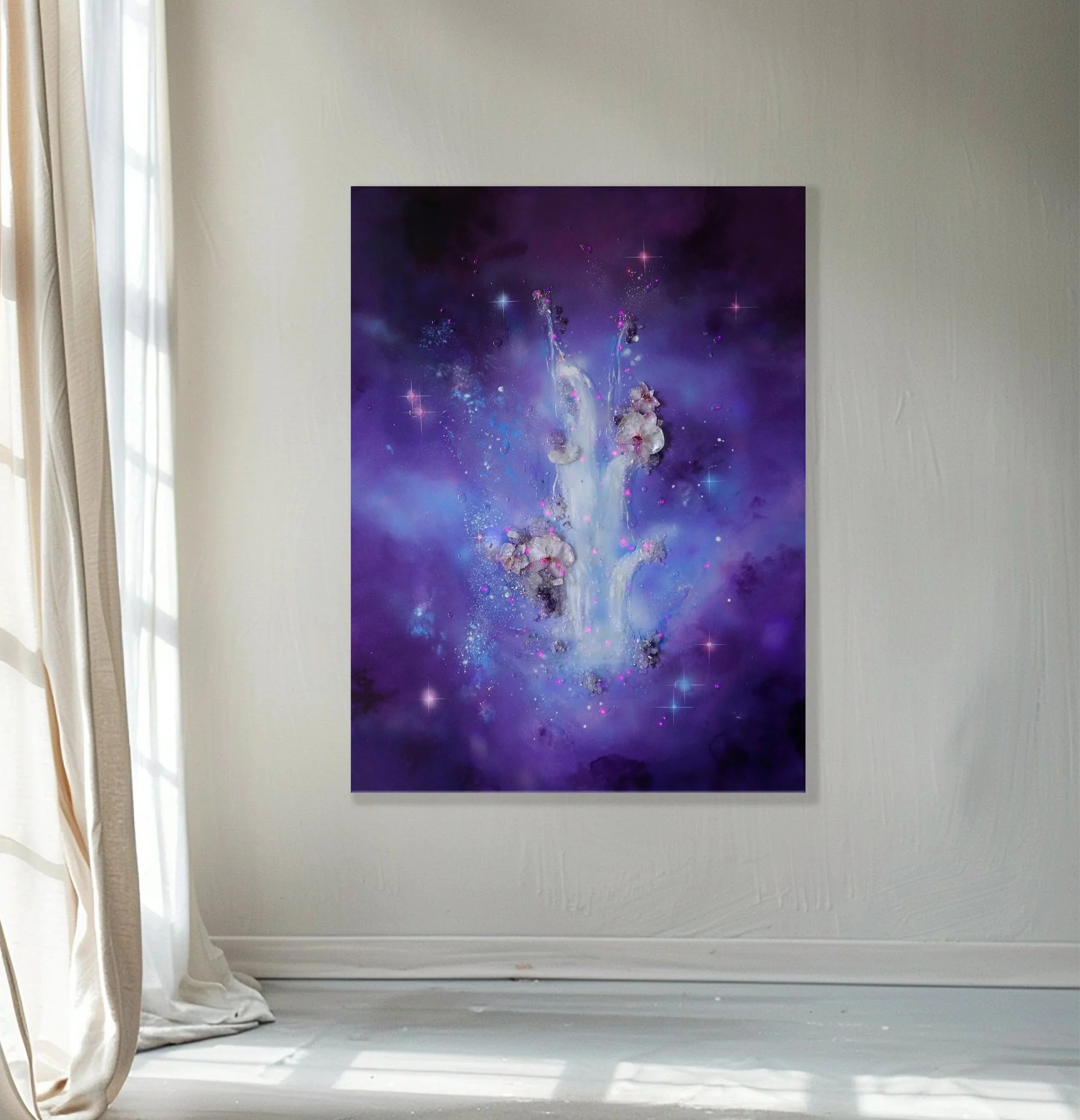
I think the work that comes from that tension is more honest than work that comes from one place. There's a longing in it. A reaching. A memory of the ocean living inside a painting made in the desert.
In June, 2026, I’ll be showing my work in the Kayenta Theater Center in Ivins, Utah. Just outside of St George. Which feels particularly fitting. The view from that village is pure Southern Utah. Red rock, open sky, that light. And my work will be inside it. That feels right in a way I'm still finding words for.
If you're in Southern Utah, I'd love for you to come experience the work in person. And if you're somewhere else entirely — I think you'll still recognize the landscape, in whatever way your own version of it lives in you.
